
Merchandise Description
Our Merchandise Unique Functions,
one) Our goods handed TS16949 ISO-9001: 2000 top quality management method verification
2) Material: Steel, copper, brass, aluminum, Titanium
three) Gear: CNC lathe, CNC milling device, CNC substantial-pace engraving equipment, Typical devices, laser engraving equipment, metallic injection device
4) Precision machining functionality:
five) Sophisticated workmanship, fitting resource, fixture, cutting device
six) Components can be provided in accordance to customers’ drawings or samples.
7) Second/3D drawings or samples are welcome!
eight). Very best quality, aggressive cost, shortest shipping time and great services.
How to Establish the High quality of a Worm Shaft
There are numerous advantages of a worm shaft. It is less difficult to manufacture, as it does not require guide straightening. Amongst these benefits are ease of upkeep, lowered value, and ease of installation. In addition, this variety of shaft is a lot less prone to damage owing to manual straightening. This post will discuss the distinct aspects that decide the quality of a worm shaft. It also discusses the Dedendum, Root diameter, and Wear load capacity.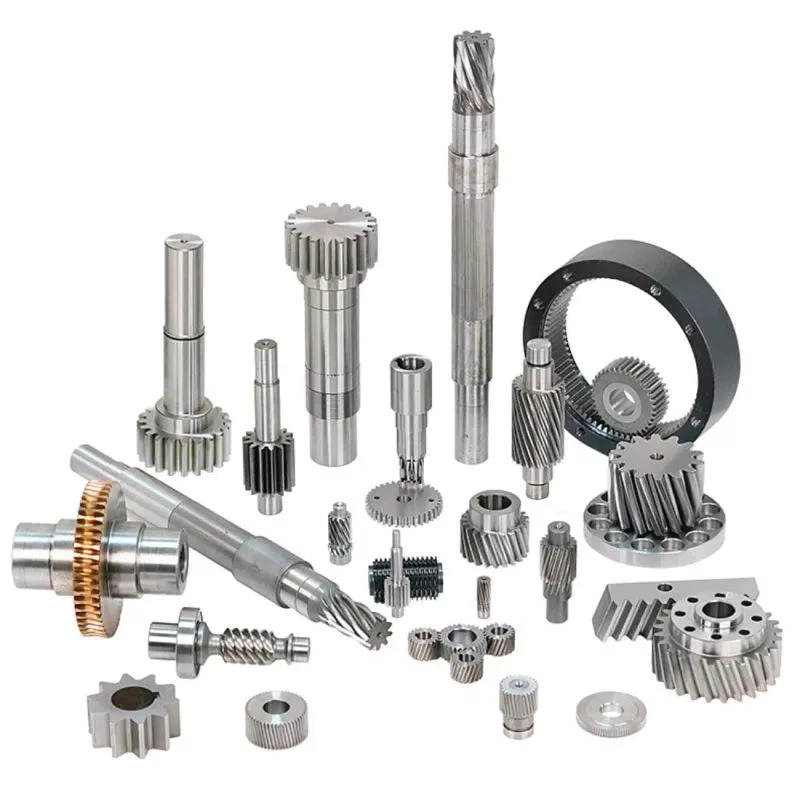
Root diameter
There are various possibilities when choosing worm gearing. The variety is dependent on the transmission employed and generation possibilities. The standard profile parameters of worm gearing are described in the expert and company literature and are utilised in geometry calculations. The chosen variant is then transferred to the primary calculation. Nonetheless, you have to just take into account the energy parameters and the equipment ratios for the calculation to be precise. Here are some guidelines to decide on the right worm gearing.
The root diameter of a worm gear is measured from the middle of its pitch. Its pitch diameter is a standardized worth that is established from its strain angle at the point of zero gearing correction. The worm equipment pitch diameter is calculated by introducing the worm’s dimension to the nominal heart distance. When defining the worm gear pitch, you have to hold in thoughts that the root diameter of the worm shaft need to be smaller than the pitch diameter.
Worm gearing calls for enamel to evenly distribute the dress in. For this, the tooth aspect of the worm must be convex in the typical and centre-line sections. The condition of the tooth, referred to as the evolvent profile, resembles a helical gear. Normally, the root diameter of a worm equipment is much more than a quarter inch. Even so, a fifty percent-inch big difference is appropriate.
An additional way to determine the gearing effectiveness of a worm shaft is by searching at the worm’s sacrificial wheel. A sacrificial wheel is softer than the worm, so most dress in and tear will happen on the wheel. Oil investigation studies of worm gearing units nearly often demonstrate a high copper and iron ratio, suggesting that the worm’s gearing is ineffective.
Dedendum
The dedendum of a worm shaft refers to the radial duration of its tooth. The pitch diameter and the small diameter decide the dedendum. In an imperial system, the pitch diameter is referred to as the diametral pitch. Other parameters incorporate the encounter width and fillet radius. Confront width describes the width of the equipment wheel without hub projections. Fillet radius measures the radius on the tip of the cutter and forms a trochoidal curve.
The diameter of a hub is calculated at its outer diameter, and its projection is the distance the hub extends outside of the equipment encounter. There are two types of addendum teeth, one with short-addendum teeth and the other with lengthy-addendum teeth. The gears them selves have a keyway (a groove machined into the shaft and bore). A key is equipped into the keyway, which matches into the shaft.
Worm gears transmit motion from two shafts that are not parallel, and have a line-toothed layout. The pitch circle has two or a lot more arcs, and the worm and sprocket are supported by anti-friction roller bearings. Worm gears have higher friction and wear on the tooth enamel and restraining surfaces. If you would like to know a lot more about worm gears, just take a look at the definitions underneath.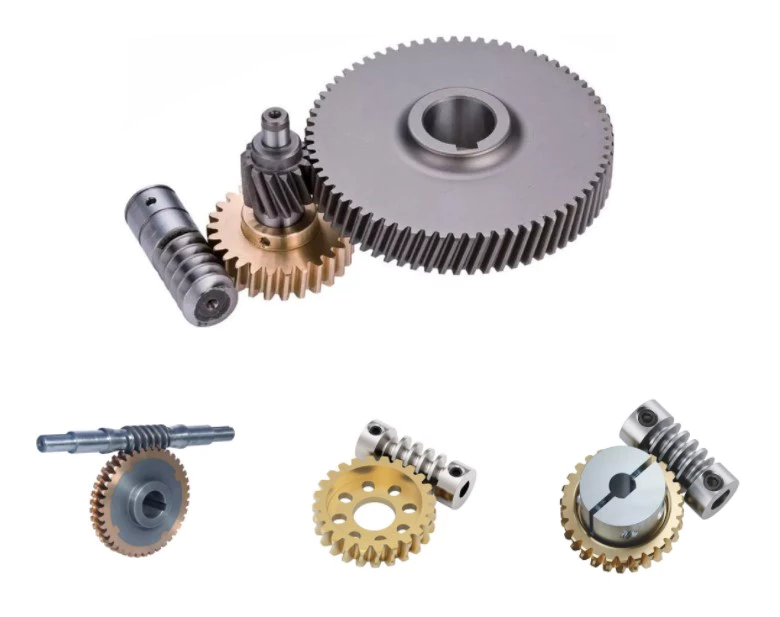
CZPT’s whirling procedure
Whirling procedure is a contemporary production strategy that is replacing thread milling and hobbing procedures. It has been able to reduce production costs and lead instances while making precision gear worms. In addition, it has lowered the need to have for thread grinding and surface roughness. It also reduces thread rolling. Here is much more on how CZPT whirling process performs.
The whirling method on the worm shaft can be utilised for generating a assortment of screw varieties and worms. They can make screw shafts with outer diameters of up to 2.5 inches. In contrast to other whirling procedures, the worm shaft is sacrificial, and the method does not call for machining. A vortex tube is employed to produce chilled compressed air to the cutting point. If necessary, oil is also additional to the mix.
One more technique for hardening a worm shaft is known as induction hardening. The approach is a large-frequency electrical procedure that induces eddy currents in metallic objects. The larger the frequency, the more floor warmth it generates. With induction heating, you can plan the heating procedure to harden only distinct locations of the worm shaft. The size of the worm shaft is normally shortened.
Worm gears offer quite a few positive aspects more than normal equipment sets. If utilized accurately, they are reputable and highly efficient. By adhering to appropriate set up tips and lubrication guidelines, worm gears can deliver the exact same trustworthy support as any other variety of equipment set. The report by Ray Thibault, a mechanical engineer at the College of Virginia, is an excellent guide to lubrication on worm gears.
Dress in load capacity
The put on load capacity of a worm shaft is a essential parameter when figuring out the performance of a gearbox. Worms can be manufactured with different gear ratios, and the design and style of the worm shaft ought to replicate this. To determine the wear load ability of a worm, you can check its geometry. Worms are usually created with teeth ranging from a single to 4 and up to twelve. Selecting the right quantity of enamel is dependent on numerous aspects, which includes the optimisation needs, this kind of as efficiency, excess weight, and centre-line length.
Worm equipment tooth forces enhance with elevated electrical power density, triggering the worm shaft to deflect a lot more. This decreases its put on load capacity, lowers efficiency, and will increase NVH behavior. Developments in lubricants and bronze supplies, merged with better production high quality, have enabled the steady improve in power density. These three aspects merged will decide the put on load potential of your worm equipment. It is critical to consider all three elements prior to choosing the appropriate gear tooth profile.
The minimal quantity of equipment tooth in a equipment depends on the strain angle at zero gearing correction. The worm diameter d1 is arbitrary and relies upon on a known module worth, mx or mn. Worms and gears with different ratios can be interchanged. An involute helicoid guarantees suitable speak to and form, and gives increased precision and existence. The involute helicoid worm is also a key component of a equipment.
Worm gears are a kind of ancient gear. A cylindrical worm engages with a toothed wheel to lessen rotational pace. Worm gears are also utilised as prime movers. If you might be seeking for a gearbox, it may possibly be a very good alternative. If you are contemplating a worm equipment, be sure to examine its load capability and lubrication specifications.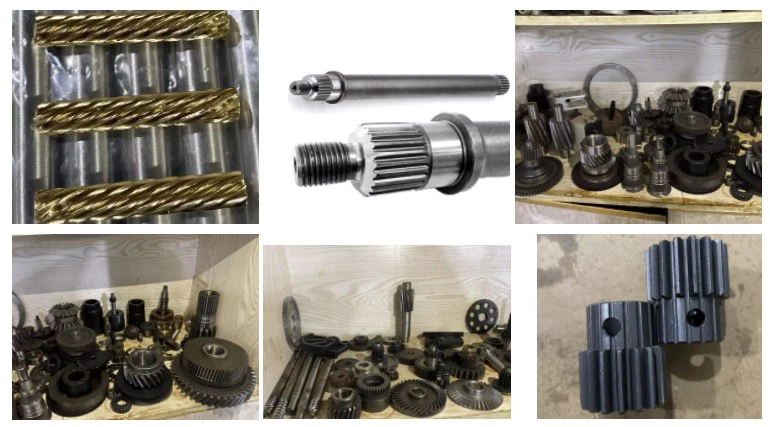
NVH habits
The NVH habits of a worm shaft is determined employing the finite element method. The simulation parameters are described using the finite aspect technique and experimental worm shafts are compared to the simulation benefits. The results show that a large deviation exists in between the simulated and experimental values. In addition, the bending stiffness of the worm shaft is highly dependent on the geometry of the worm gear toothings. That’s why, an satisfactory design and style for a worm equipment toothing can aid reduce the NVH (noise-vibration) actions of the worm shaft.
To estimate the worm shaft’s NVH habits, the major axes of instant of inertia are the diameter of the worm and the amount of threads. This will impact the angle among the worm tooth and the successful length of each tooth. The length amongst the principal axes of the worm shaft and the worm equipment is the analytical equal bending diameter. The diameter of the worm gear is referred to as its efficient diameter.
The elevated power density of a worm gear outcomes in elevated forces performing on the corresponding worm gear tooth. This leads to a corresponding increase in deflection of the worm gear, which negatively has an effect on its effectiveness and use load capability. In addition, the escalating electrical power density requires improved producing quality. The ongoing progression in bronze resources and lubricants has also facilitated the ongoing increase in energy density.
The toothing of the worm gears establishes the worm shaft deflection. The bending stiffness of the worm equipment toothing is also calculated by using a tooth-dependent bending stiffness. The deflection is then converted into a stiffness benefit by using the stiffness of the individual sections of the worm shaft. As proven in figure 5, a transverse area of a two-threaded worm is shown in the determine.


 English
  Italian