
Worm Shaft
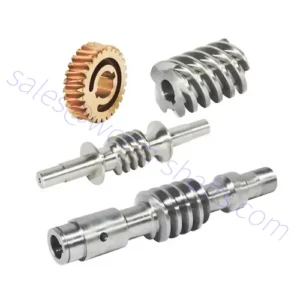
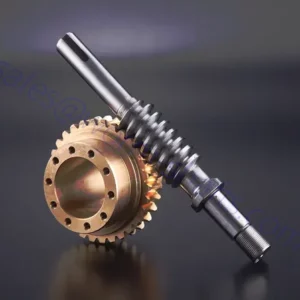
A worm gear is a gear consisting of a shaft with a helical thread that meshes with and drives a toothed wheel. The worm gear is an old style of gear and a version of one of the six simple machines. Basically, a worm gear is a screw that mates with what looks like a standard spur gear with slightly angled and curved teeth.
Worm Gears - Compact Design
A worm gear is a gear device whose two shafts are at right angles or close to right angles and do not intersect. There are one or more helical teeth that form a gear that looks like a worm. The mating gears are called worm gears; together they are called worm and worm wheel or simply worm gear. Compared with spur gears, a high reduction ratio can be obtained in a small space. Therefore, it is common practice to use a worm as a prime mover when a large reduction in speed is required in one quick stroke.
The Origin of the Worm Gear
Consider a pair of helical gears where the pinion teeth have been reduced to one or a few teeth, where the two axes do not intersect. The pinion then becomes the shape of an ordinary screw, allowing for greater reduction. At this time, the meshing is a point contact, which can only bear a small load and is prone to friction. However, by using a hob in the shape of a pinion and having the rotation of the cutter correspond to the movement of the worm relative to the worm wheel, it is possible to obtain a gear set with line contact.
Worm Gear for Sale
As a product manufacturer, we will do our best to serve you. If you need customized products, or the products you need are not found on our website or need a product catalog, don’t worry, more of our products are still being uploaded. You can email us directly, and we will reply to you within 24 hours!
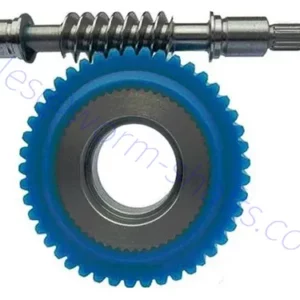
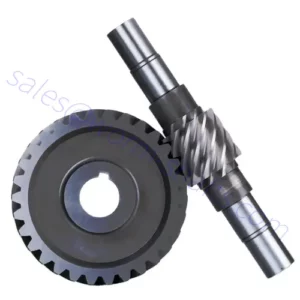
Worm Gear Material
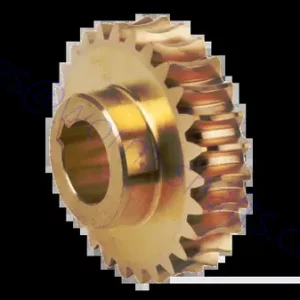
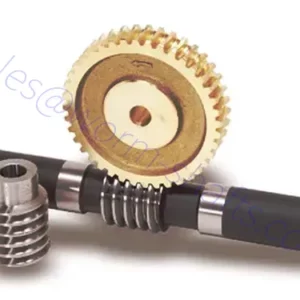
The most common worm gears are made of brass wheels and steel worms. This is because the brass wheel is usually easier to replace than the worm itself. The wheel is made of brass as it was designed for sacrifice.
With the two surfaces in contact, the worm is slightly safer to wear due to the softer wheel, so most of the wear occurs on the wheel. Oil analysis reports for such units almost always show some level of copper and a small amount of iron – a result of the sacrificial wheel.
Steel Worm and Steel Worm Gear – This application does not have the EP complications of brass gears, but there is no room for error in a gearbox like this. Restoring a worm gear set with this metal combination is usually more expensive and time consuming than using a brass/steel worm gear set. This is because the material transfer associated with the failure made both the worm and the wheel unusable in the rebuild.
Brass Worms and Brass Worm Gears – This application is most likely to be found under moderate to light loads, as brass can only handle lower loads. Lubricant selection is flexible for this combination of metals due to the lighter loads, but due to the yellow metal one still has to consider the additive limitations regarding EP.
Plastic on metal, plastic on plastic, and other similar combinations—this is often found in relatively light-loaded applications, such as robotics and automotive components. Lubricant choice depends on the plastic used, as many plastic varieties react with hydrocarbons in conventional lubricants, requiring silicon-based or other non-reactive lubricants.
Strength. Reliability. Flexibility.
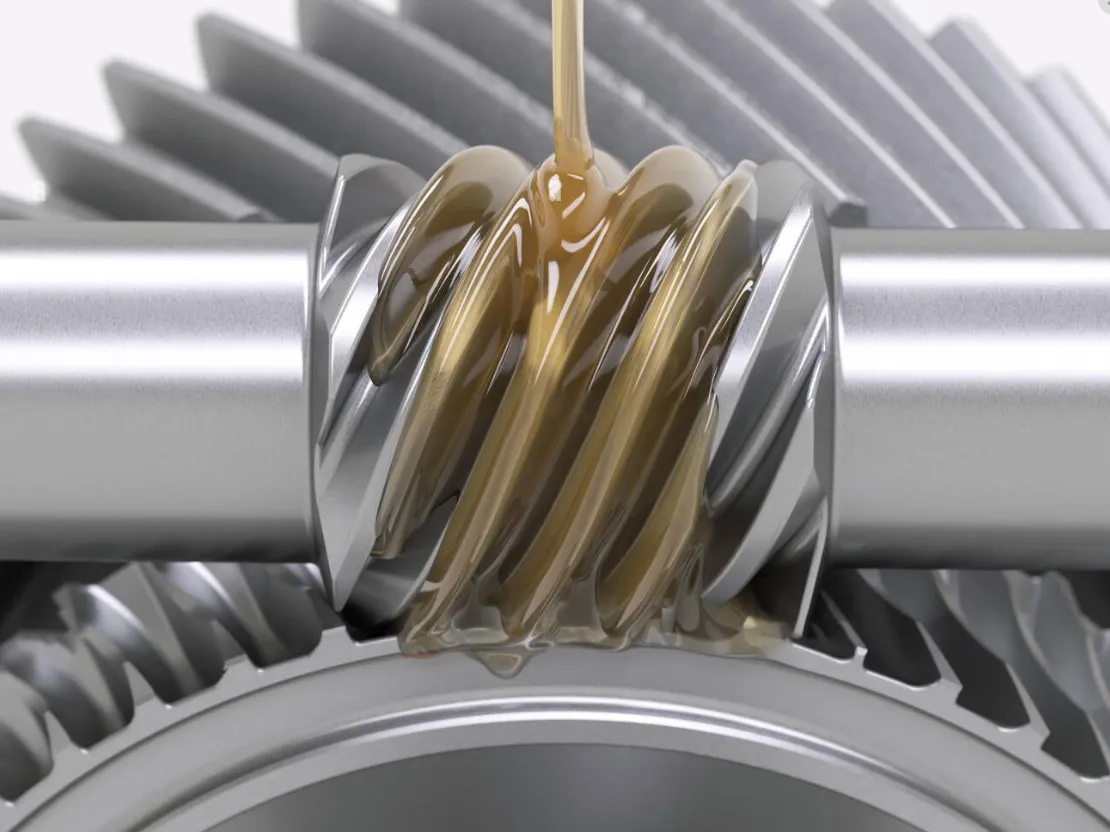
Worm Gear Lubrication
With a worm gear, the sliding motion is the only power transmission. As the worm slides over the gear teeth, it slowly wipes off the lubricant film until there is no lubricant film left, and, as a result, the worm rubs against the metal of the wheel in boundary lubrication. As the worm surface leaves the surface of the wheel, it absorbs more lubricant and starts the process all over again on the next rotation.
Where Are They Used?
The meshing of the worm and the gear is a mixture of sliding and rolling, but sliding contact accounts for under high slowdowning ratio. This sliding movement can produce friction and heat, thereby limiting the efficiency of the worm wheels to 30% to 50%. In order to minimize friction (so as to reduce calories), the worm and gears are made of different metals -for example, the worm may be made of hardening steel, and the gear is made of bronze or aluminum.
Although sliding contact has reduced efficiency, it provides very quiet operations. (The use of different metals in the worm and gears also helps to run quietly.) This allows the worm wheels to minimize the noise, such as an elevator. In addition, the gear uses softer materials means that it can absorb impact loads, just like the heavily device or crusher experience.
The main benefit of the worm is that they can provide a high deceleration ratio and corresponding high torque. They can also be used as reducers in low-speed applications. Moreover, because their deceleration is based on the number of gears, they are more compact than other types of gears. Like the sparse screw, the worm is usually self -locking, which makes them very suitable for lifting and lifting applications.
Get In Touch
Mail:[email protected]
Custom leaf assemblies improve manufacturing and product performance. End-to-end solutions – from custom design to delivery
Hours
Mon-Fri:10am – 5pm
Sat-Sun: 10am – 3pm
 Arabic
  English
  Italian
  Greek
Greek  German
  Spanish